
Welcome to Huang’s Research Group @ CUHK
Overview of Research
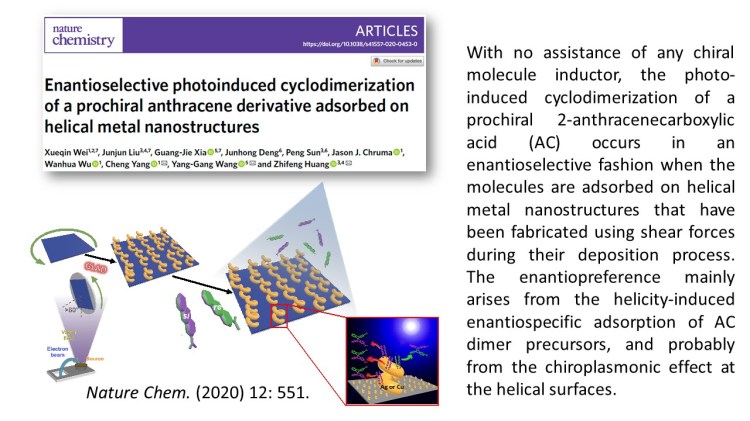
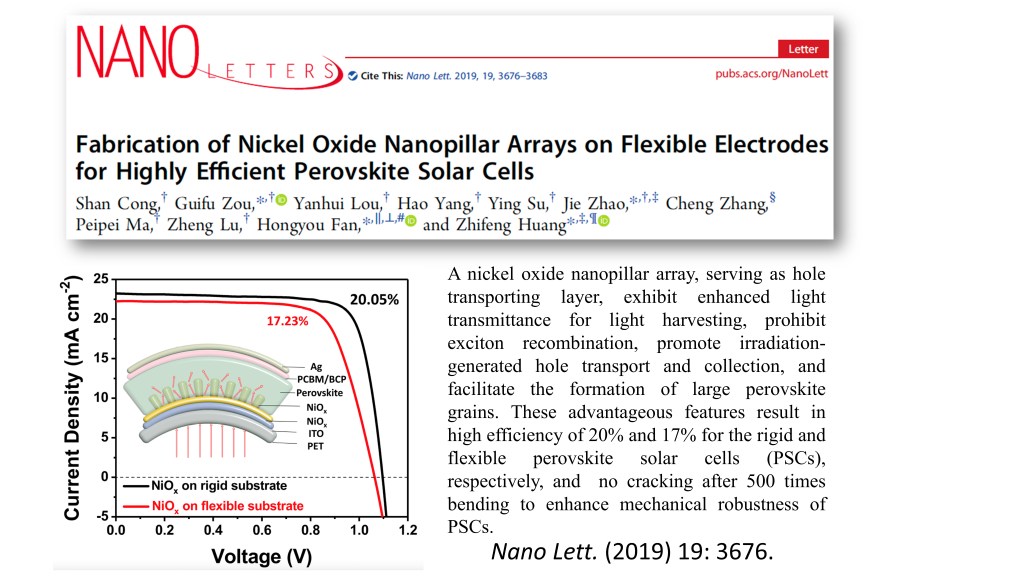
We are devoted to applying inorganic sculptured nanopillars, fabricated by glancing angle deposition (GLAD), to study
- Chiral nano-inorganics for disclosure of the origins of biochemical homochirality, enantiodifferentiation, asymmetric photo/electrochemical catalysts, spin chemistry, bio-sensing, bio-imaging, enantioseperation, and chiroplasmonics;
- Surface-enhanced chiroptical spectroscopies;
- Enantioselective photocatalysis;
- Flexible/wearable optoelectronics;
- Green energy generation and storage;
- Flexible/wearable optoelectronics;
- Green energy generation and storage; and
- Inorganic biocompatible extracellular nanomatrices for growth-factor-free prompt proliferation and specific differentiation of stem cells.
Group Philosophy
- To research with fundamental, technical and/or social impacts;
- To enhance personal competitiveness;
- Not to waste time invested.
做有意义的科研
提高自身竞争力
不浪费投资的时间
Highlighted Research



Lastest Group News
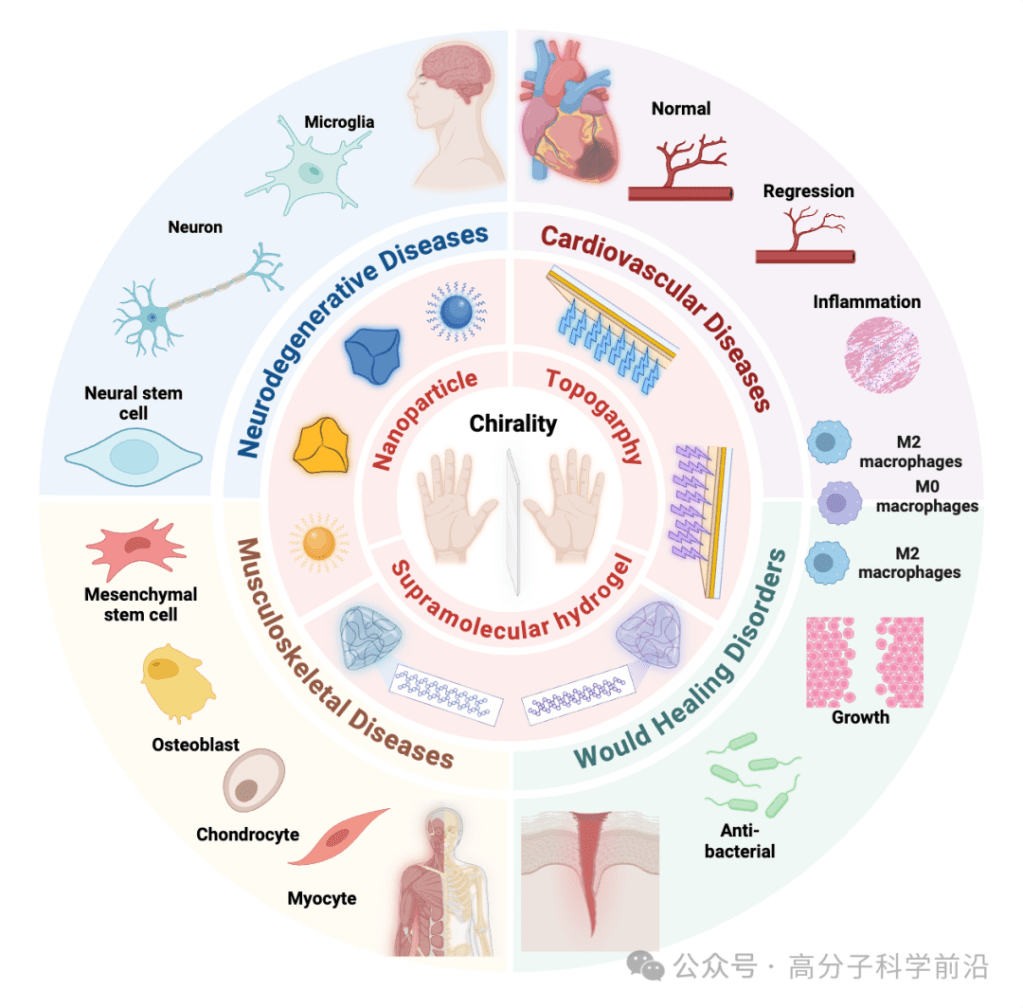
“Review by Zhong Alan Li and Zhifeng Huang from CUHK, and Academician Chunying Chen from the National Center for Nanoscience and Technology, titled ‘AFM: Applications of Chiral Engineered Biomaterials in Regenerative Medicine'”
08/10/2024
Recently, Li Zhong and Huang Zhengfeng from The Chinese University of Hong Kong, in collaboration with Academician Chen Chunying from the National Center for Nanoscience and Technology, have systematically reviewed the latest advances and future applications of chiral engineered biomaterials in regenerative medicine. The first author of this review is Wang Yuwen, a second-year PhD student from the Department of Biomedical Engineering at The Chinese University of Hong Kong. The paper, titled ‘Chiral Engineered Biomaterials: New Frontiers in Cellular Fate Regulation for Regenerative Medicine,’ was published on December 26 in Advanced Functional Materials.

Wily report:香港教育大学翁建霖,香港中文大学黄陟峰,暨南大学张世卿AM:二氧化硅纳米基质通过激活黏着斑激酶促进抗肿瘤树突状细胞的体外
08/10/2024
近日,由香港教育大学翁建霖,香港中文大学黄陟峰与暨南大学张世卿带领的科研团队提出一种新型的Z字形二氧化硅纳米基质(Nanozigzags or NZs)能促进DC的体外成熟及抗肿瘤作用。该纳米基质采用大掠射角物理气相沉积法制备,通过工程化调节基质上的纳米结构,团队发现间距为245纳米的三间距NZs(NZs-P245-N3)能更有效地促进小鼠骨髓来源DC(mBMDC)的体外成熟,上调mBMDC中CD86、CCR7、XCR1、DC-SIGN的表达及细胞内吞能力。其中,CD86、XCR1、DC-SIGN的表达是透过激活在DC与NZs之间的细胞黏附中的黏着斑激酶(Focal adhesion kinase,FAK)而上调的。由NZs-P245-N3诱导成的mBMDC功能表型可以在体外将抗原特异性CTLs诱导为PD-1低表达、CD44高表达的记忆表型,并在体内抑制肿瘤生长。同时,NZs-P245-N3介导的有益效应也在人类单核细胞来源的DC中观察到。本研究表明,细胞外二氧化硅纳米基质通过机械性的激活FAK,促进了体外成熟DC的抗肿瘤能力,可以作为癌症免疫治疗中一种有前景的生物材料。
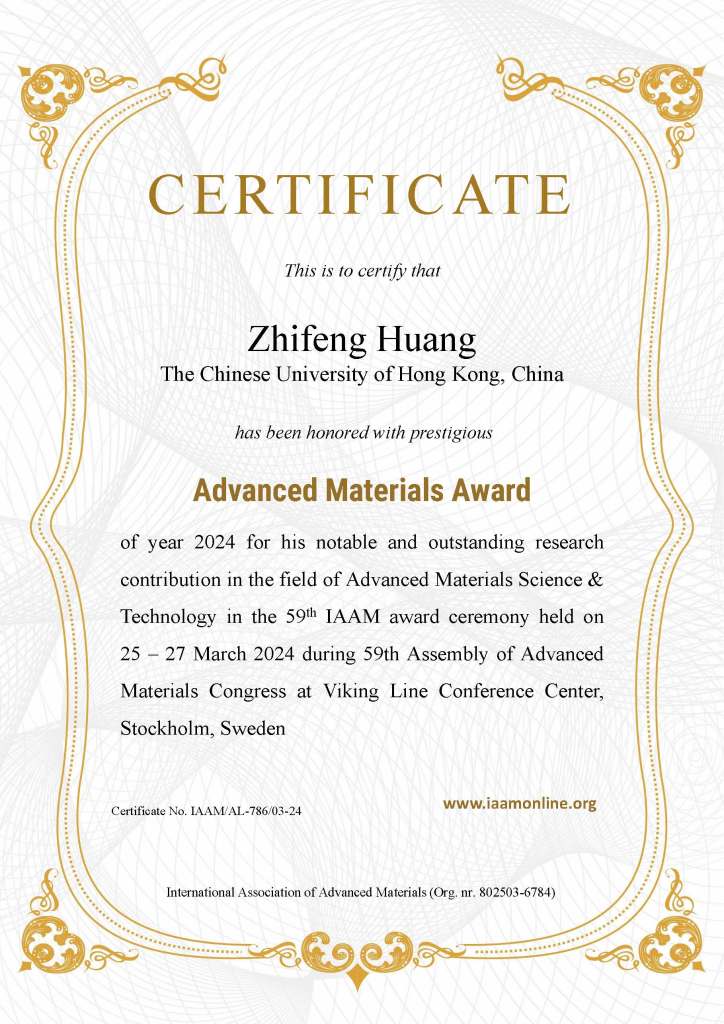
Advanced Materials Award 2024
07/05/2024
Congratulations to Professor Huang for winning the Advanced Materials Award 2024 (International Association of Advanced Materials, IAAM)
Advanced Materials Award is one of the most important honours that the International Association of Advanced Materials confers upon elite scientists and researchers working to interface the Materials Science, Engineering, and Technology to recognize their achievements and accomplishments
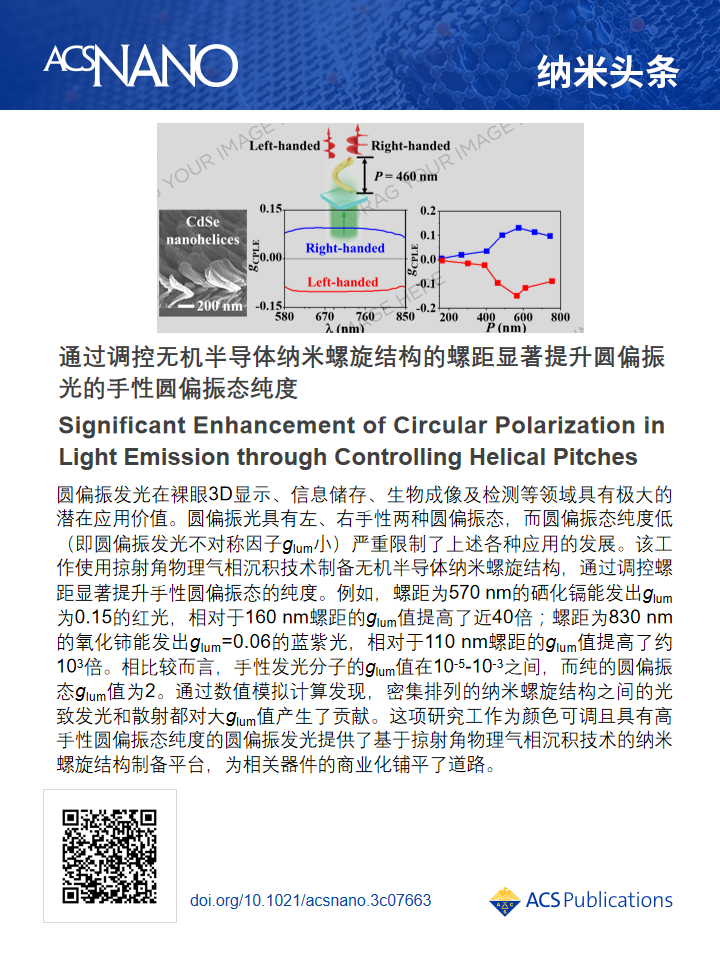
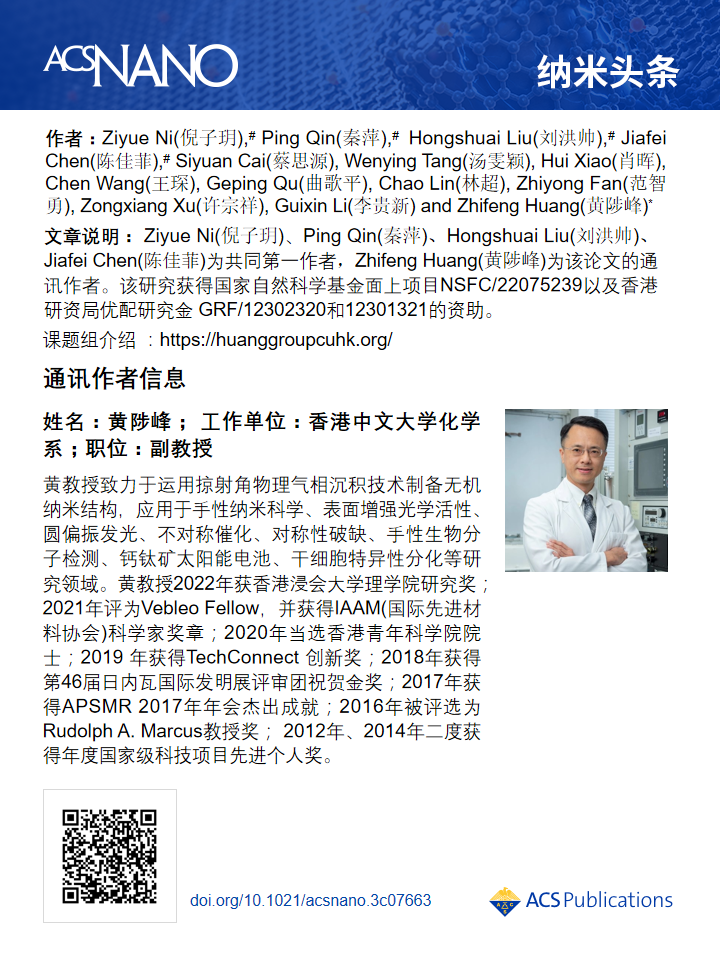
ACS Nano Nano Headlines | Huang Zhifeng Team at the Chinese University of Hong Kong
28/10/2023
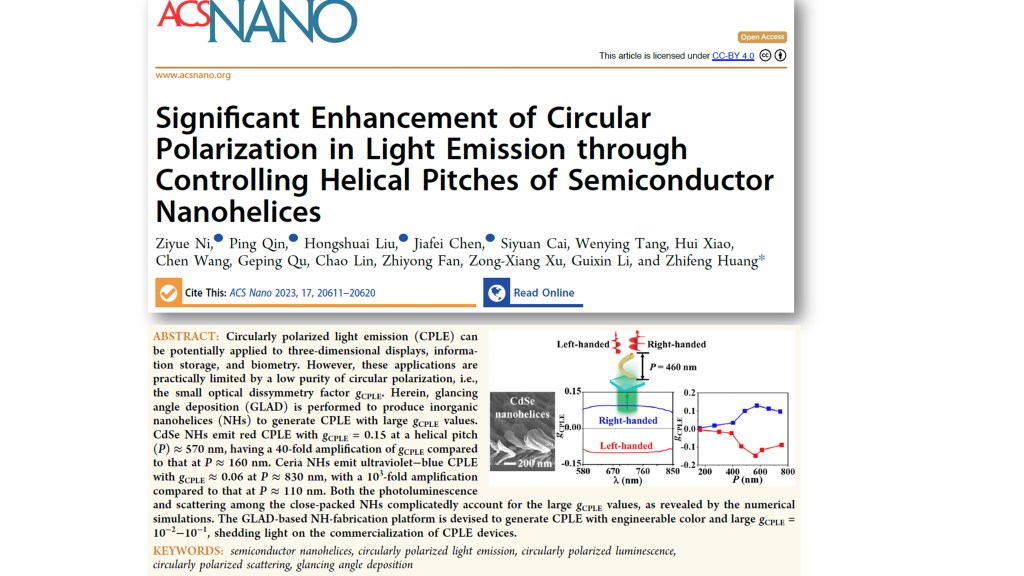
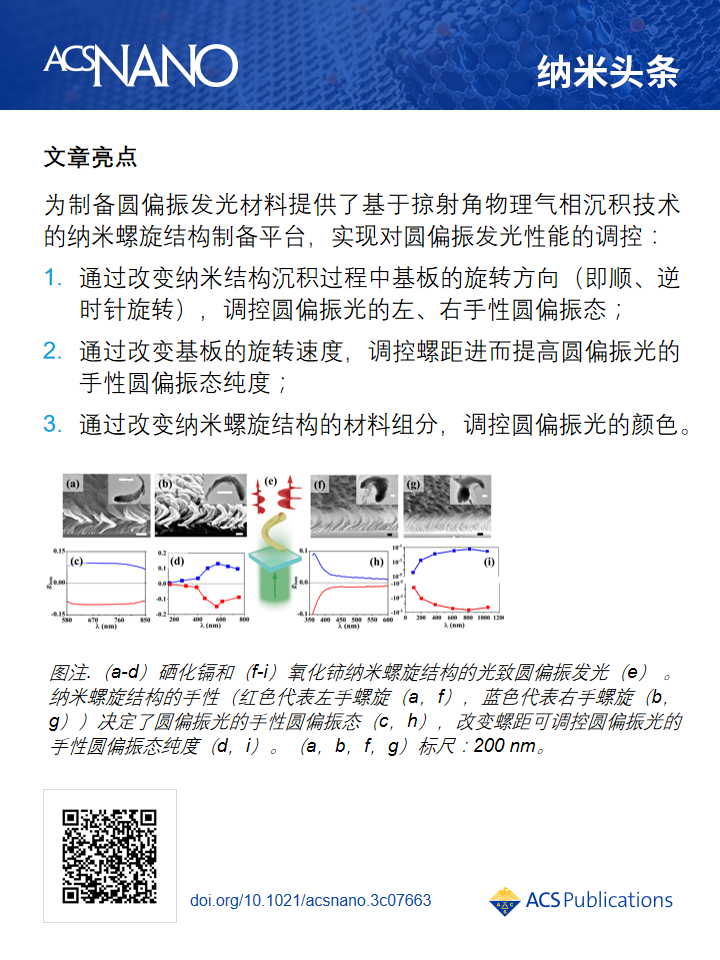
Significant Enhancement of Circular Polarization in Light Emission through Controlling Helical Pitches of Semiconductor Nanohelices
 Huang's Functional Nanomaterials Lab